
The Bold Return

The winter here in the hills of Vermont held longer than it should have. Snow stayed deep into the fields, crusted in the mornings, softening only a little by afternoon, then locking back into place by night. The woodline kept its cold. The High Wood, as my daughter named it, stood dark and still through those months, white pine heavy with snow, hemlock bowed low, maple branches stiff and waiting. There was little movement here in the meadow: a few birds at the feeder, a single set of deer tracks cutting across the far edge of the field, signs of the ever-present skunks cleaning up the bee yard. Most everything else kept itself hidden, conserving, enduring, holding fast beneath the weight of winter.
Then, almost all at once, the field filled.
It began with the turkeys. A massive flock, larger than any I have seen here, poured out from the edge of the trees and into the open ground. Heads low, bodies steady, a dark tide across the pale field. My wife spotted them first where the forest meets the field and watched as they mingled, dozens upon dozens, until the whole field seemed alive with them. At some unseen signal they turned and fled toward the shelter of the forest. They slipped into The High Wood where the land rises slightly and the white pine gives way to maple, where a small stand of hemlock gathers itself close and thick. That place holds its own kind of quiet. It breaks the wind. It keeps the snow longer. It offers cover when the open field does not. The massive flock is there now, darting about amid the grey and the green.
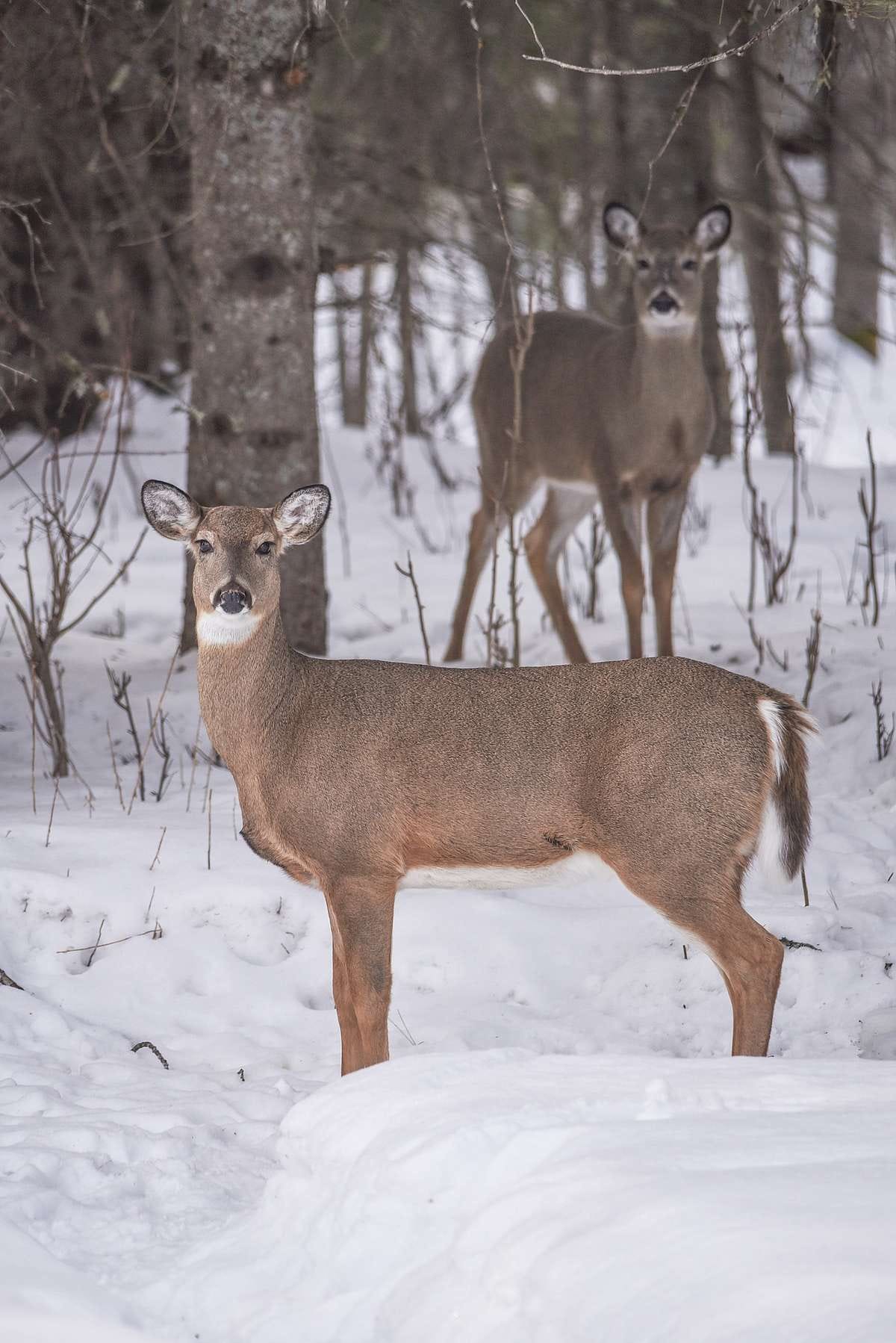
The deer have followed. They move now in numbers, not the solitary shapes we grew used to in January, but groups, heads down, pressing forward through the thawing ground. They are reckless and they are lean. You can see it in the way they carry themselves, in the sharpness along their backs, in the urgency of their movement. They linger at the edges of the field, then push out, then retreat again, driven by a long winter hunger. They nose through the softening earth, through last year’s grasses, through whatever they can find that offers even a little strength. There is no hesitation in them now. Only motion.
Above it all, a lone hawk circles, cutting low over the pasture, riding the uneven currents that rise from the warming ground. The raptors were absent through the coldest stretch. Now they are back, scanning, patient, deliberate. Walk through the village at night and you may see an owl dart past the chimneys by the old smith shop and into the forest behind our meadow. They too are hungry and happy to see fields bare of the sheltering snow that hid their mouse-prey all winter long.
Everything is waking, but it is not the gentle waking we expect. It is not the first robin alone on the fence post, not a single pair of tracks crossing fresh mud. It is larger than that. Flocks, herds, wide movements across the field and bold arcs in the sky with sudden returns to the shelter of the trees. Activity gathers and releases, gathers and releases again. The land feels busy in a way that carries weight. The long winter pressed everything down, held it in place, asked it to endure without any promise. What we are seeing now is the answer to that pressure. Life returning not in small, careful steps, but in numbers, in motion, in a kind of heedless urgency that makes you point with your child and command “Look!”
We walked out to the edge of The High Wood this morning. The snow there still lingers in the shadows of the hemlock, damp and dark, while the open ground nearby has begun to give way. Meltwater threads its way downhill. The maples show the first hints of change at their tips. My daughter stood at the boundary where the field meets the trees and looked in, half curious, half cautious. This is her place, named and known, yet it holds its own will. The turkeys were somewhere inside, out of sight, settled into their cover. The deer had already passed through. The air carried the faint smell of thawing earth, of needles, of bark warming in the light.
There is a lesson here if we are willing to see it. The land does not rush its rest. It accepts the long winter, the stillness, the scarcity. It holds what it must hold. Then, when the time comes, it does not return halfway or with timidity. It returns in full, desperate measure. Movement, hunger, presence, all of it at once. We often try to ease our way back into things, to test the ground, to ration our energy even after the season of rest has passed. The field does not do this. The animals do not do this. They step out together. They move with purpose. They take what is needed and they press forward.
The last of the snow will be gone soon enough. The smaller signs of spring will follow. The birds will settle into their usual patterns. The urgency will fade into something steadier. For now though, we are in this brief window where everything feels enlarged, where life returns in visible and dramatic force across the land. It is a good thing to witness. It reminds us that rest has its place, and so does the bold, bold, bold return.
